Article
AI in Education: Everything You Need to Know
AI in Education: Everything You Need to Know
Meta Title: AI in Education: Everything You Need to Know (2026 Guide) Meta Description: Discover how Artificial Intelligence is transforming education through personalized learning, AI tutors, adaptive learning, automated assessments, and smarter classrooms.
Introduction
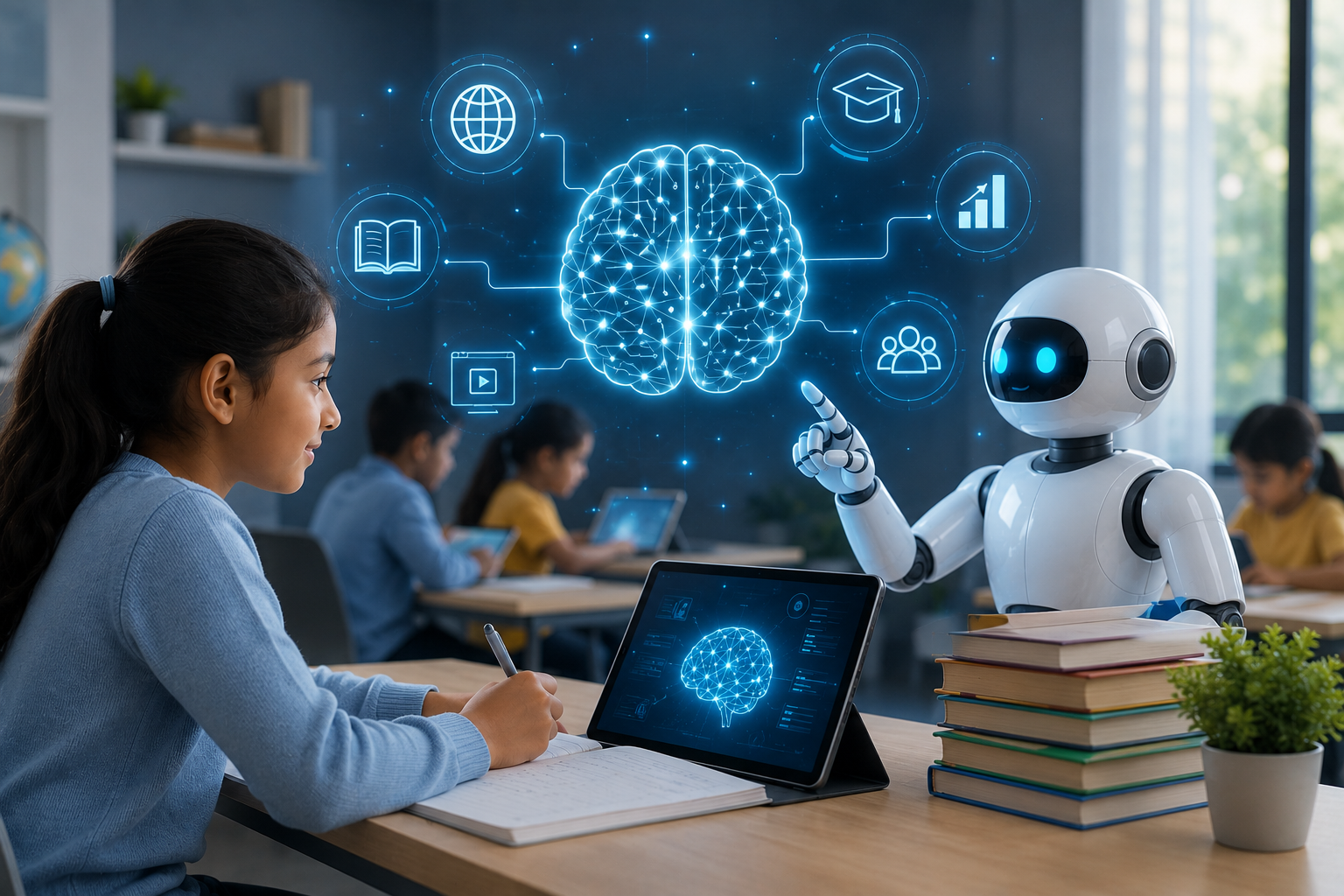
Education is undergoing one of the biggest transformations in history, driven by Artificial Intelligence (AI). What was once limited to science fiction has become a reality in classrooms, homes, and universities around the world. From AI Tutors that answer questions instantly to intelligent learning platforms that personalize lessons for every student, AI is reshaping how knowledge is delivered and consumed.
Rather than replacing teachers, AI enhances education by making learning more engaging, accessible, and personalized. Students receive instant feedback, teachers save time on repetitive tasks, and educational institutions gain valuable insights into learning outcomes.
Whether you're a parent, teacher, student, or school administrator, understanding AI in education is essential for preparing for the future of learning.
What Is AI in Education?
Artificial Intelligence in education refers to the use of intelligent software and machine learning technologies to improve teaching, learning, and educational management.
AI systems can:
Understand student learning behavior
Personalize lessons
Answer academic questions instantly
Recommend study materials
Track learning progress
Automate assessments
Provide real-time feedback
Support teachers with administrative tasks
Instead of offering the same learning experience to everyone, AI adapts to each learner's individual needs.
Why AI Is Transforming Education
Traditional education often follows a one-size-fits-all model, where every student learns at the same pace using the same teaching methods. However, every learner is different.
Some students learn quickly, while others require additional explanations and practice. AI bridges this gap by creating personalized learning experiences for every student.
Key reasons why AI is becoming essential include:
Personalized learning paths
24/7 academic support
Faster doubt resolution
Better student engagement
Improved learning outcomes
Data-driven teaching decisions
Greater accessibility for learners worldwide
How AI Works in Education
Modern AI platforms continuously analyze how students learn.
They monitor:
Learning speed
Quiz performance
Assignment completion
Areas of difficulty
Preferred learning methods
Time spent on lessons
Revision frequency
Participation levels
Using this information, AI recommends personalized lessons, practice exercises, and study plans that match each student's learning style.
Key Applications of AI in Education
1. AI Tutors
AI Tutors provide students with instant academic assistance whenever they need it.
They can:
Explain difficult concepts
Solve academic doubts
Generate practice questions
Conduct quizzes
Recommend revision topics
Provide multilingual support
Unlike traditional tutoring, AI Tutors are available 24 hours a day.
2. Personalized Learning
Every learner has different strengths and weaknesses.
AI creates personalized learning journeys by:
Adjusting lesson difficulty
Recommending additional practice
Suggesting revision schedules
Providing customized explanations
Tracking continuous improvement
Students learn at their own pace instead of trying to keep up with everyone else.
3. Intelligent Assessments
AI automates many aspects of evaluation.
It can:
Grade quizzes instantly
Analyze student performance
Identify knowledge gaps
Recommend improvements
Generate personalized reports
Teachers spend less time grading and more time supporting students.
4. Learning Analytics
Educational institutions use AI to understand learning trends.
Analytics help identify:
Students at risk of falling behind
High-performing learners
Frequently misunderstood topics
Course completion rates
Overall classroom performance
These insights allow educators to make informed decisions and provide timely support.
5. Language Learning
AI enables students to learn in multiple languages through:
Real-time translation
Speech recognition
Pronunciation feedback
Interactive conversations
Vocabulary recommendations
This makes quality education more accessible to learners from diverse linguistic backgrounds.
Benefits of AI for Students
Students gain access to a smarter and more flexible learning experience.
Learn Anytime
AI learning platforms are available 24/7, allowing students to study whenever they choose.
Personalized Support
Every explanation is tailored to the learner's understanding.
Instant Feedback
Students receive immediate answers instead of waiting for classroom sessions.
Better Exam Preparation
AI recommends personalized revision plans based on performance.
Increased Confidence
Students can ask unlimited questions without fear of making mistakes.
Benefits of AI for Teachers
AI supports teachers by reducing repetitive work.
Teachers can:
Automate grading
Create lesson plans
Monitor student progress
Identify struggling learners
Generate assessments
Provide personalized guidance
Rather than replacing educators, AI allows them to focus on mentorship, creativity, and student engagement.
Benefits for Schools and Universities
Educational institutions benefit from:
Improved student performance
Higher engagement levels
Better retention rates
Reduced administrative workload
Data-driven academic planning
Scalable personalized education
AI also enables institutions to support larger numbers of learners without compromising quality.
Challenges of AI in Education
While AI offers significant benefits, successful implementation requires thoughtful planning.
Common challenges include:
Protecting student data and privacy
Ensuring ethical AI use
Training teachers to use AI effectively
Preventing overdependence on technology
Maintaining equal access for all students
Educational institutions should adopt AI responsibly, ensuring technology complements human teaching rather than replacing it.
Best Practices for Using AI in Education
To maximize the benefits of AI:
Use AI to support—not replace—teachers.
Encourage critical thinking instead of copying AI responses.
Protect student data with secure systems.
Combine AI learning with classroom discussions.
Monitor student progress regularly.
Provide teacher training on AI tools.
Keep learning personalized and inclusive.
When implemented thoughtfully, AI becomes a powerful partner in education.
The Future of AI in Education
The next generation of AI learning platforms will be even more interactive and intelligent.
Future innovations include:
AI-powered digital teachers
Voice-based learning assistants
Virtual Reality (VR) classrooms
Augmented Reality (AR) educational experiences
Emotion-aware learning systems
Predictive academic coaching
Multilingual AI Tutors
Career guidance based on skills and interests
These advancements will make education more engaging, accessible, and effective for learners worldwide.
Conclusion
Artificial Intelligence is transforming education by making learning more personalized, accessible, and efficient. Students receive individualized support, teachers gain valuable insights, and educational institutions can deliver high-quality education at scale.
The future of education is not about replacing teachers with machines—it's about empowering educators with intelligent tools that help every learner succeed.
As AI continues to evolve, it will become an integral part of classrooms, homeschooling, universities, and lifelong learning, creating opportunities for learners of all ages to reach their full potential.
Frequently Asked Questions (FAQs)
1. What is AI in education?
AI in education refers to the use of Artificial Intelligence to improve teaching, learning, assessments, and educational management through personalized and data-driven experiences.
2. Can AI replace teachers?
No. AI is designed to support teachers by automating routine tasks and providing personalized assistance, allowing educators to focus on teaching, mentoring, and student development.
3. How does AI personalize learning?
AI analyzes student performance, learning speed, quiz results, and study habits to recommend customized lessons, practice exercises, and revision plans.
4. What are the biggest benefits of AI in education?
Key benefits include personalized learning, 24/7 academic support, instant feedback, improved engagement, automated assessments, and better learning outcomes.
5. Is AI safe for students?
Yes, when implemented responsibly. Educational institutions should use secure platforms, protect student data, follow privacy regulations, and ensure AI is used ethically.
Final Thoughts
AI is no longer a technology of the future—it is already transforming the way students learn and teachers teach. By embracing AI responsibly, educational institutions can create more inclusive, engaging, and personalized learning experiences that prepare learners for a rapidly evolving world.